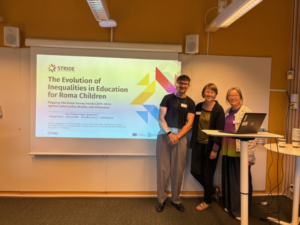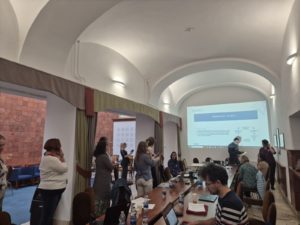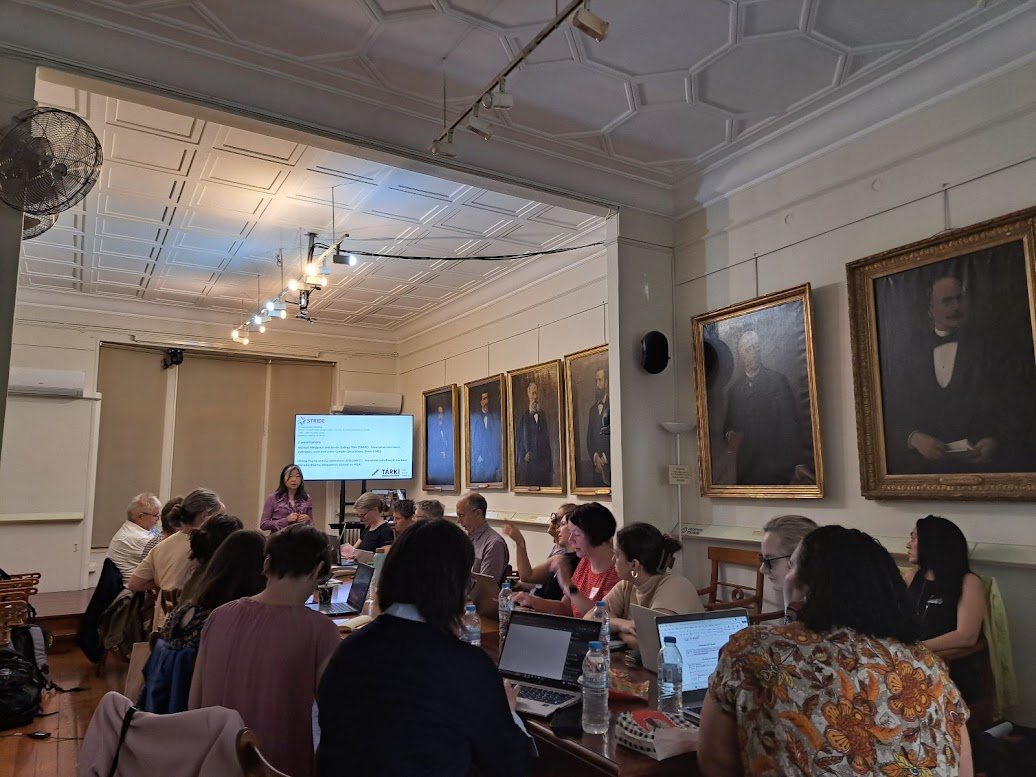
Last month, the TÁRKI Social Research Institute hosted in Budapest a co-creation workshop in the framework of the project. The workshop was a follow-up to the one in Krakow focused on linking data stemming from academic research with the policymaking cycle. The goal of the workshop was to have a first view at the digital toolbox prototype developed based on the academic research on equity and inclusion in education policies, the consultation with EU and national policy actors and the feedback provided during national level workshops. Like in previous instances, the meeting in Budapest brought together researchers and education and training stakeholders from different sectors to collect feedback to ensure that the digital toolbox and the map support policymakers in addressing educational inequalities across Europe.
What do stakeholders find useful in a digital toolbox and map?
- User experience: participants were able to navigate both the map and the digital toolbox with relative ease but provided important notes to make sure that targeted users can have a seamless experience. The main areas of improvement included improving the narrative cases (shorter and longer options), readability of outputs produced in the map and how the indicators are presented. To ensure users can perform a more in-depth exploration of the data, links to the main databases used would also be an added value. Finally, additionally signposting with contextual information in the different visual outputs produced by the map would help the user better understand the results and incorporate them in the policymaking process.
- Comparative value: while some potential for comparisons exists, additional options to compare sets of countries could provide key insights for users. Users also appreciated the idea of including best practices that can help in comparing with their own national contexts.
- User guidance: participants noted the richness of the data present in the map coming from international large-scale assessments and in the toolbox which included reforms linked to equity and inclusion in education policies of the last 25 years, targeted reforms in early childhood education and care and selected case studies in this area. However, it was noted that guiding the user with ‘how to’ examples based on real policy questions can bring benefits and support the policymaker or civil servant navigating the toolbox and map.
- Linking different types of resources: the richness in resources mentioned above provides users with a chance to visualise the data in different ways but in order to be valuable these different formats need to be, on one side, better connected so that the user can identify the linkages among them and on another it needs to be organised in a way that it doesn’t overwhelm the person extracting insights from the toolbox and map.
What is next for the digital toolbox and map?
The STRIDE Toolbox will be fine-tuned based on the feedback from the workshop in the coming months with the aim to have a useful resource that can provide insights for policymakers in EU Member States and at European institutions. The toolbox will provide access to the database of reforms collected by STRIDE researchers as well as longitudinal analyses of equity indicators and case studies of selected policy reforms that can provide policymakers across Europe the needed evidence to improve equity and inclusion in and through education and training. STRIDE partners VIA University College, Jagiellonian University and the Lifelong Learning Platform will continue to reach out to experts, policy actors and education and training stakeholders to ensure the end result can address real needs in policy making processes.
Policy makers, civil servants, researchers, practitioners and all education and training stakeholders engaged in policy making and practice around equity and inclusion in education are invited to join the STRIDE consortium in discovering the latest research results, policy recommendations and digital tools at the final conference of the project which will take place in Brussels on December 1st. Save the date and stay tuned to our channels for the launch of registrations in the coming weeks.