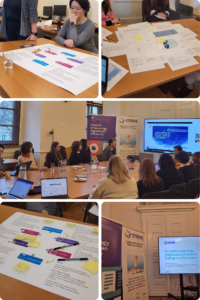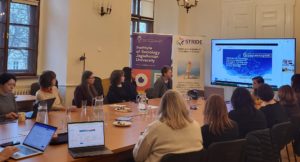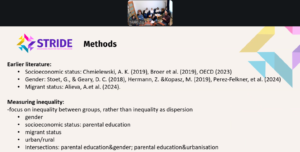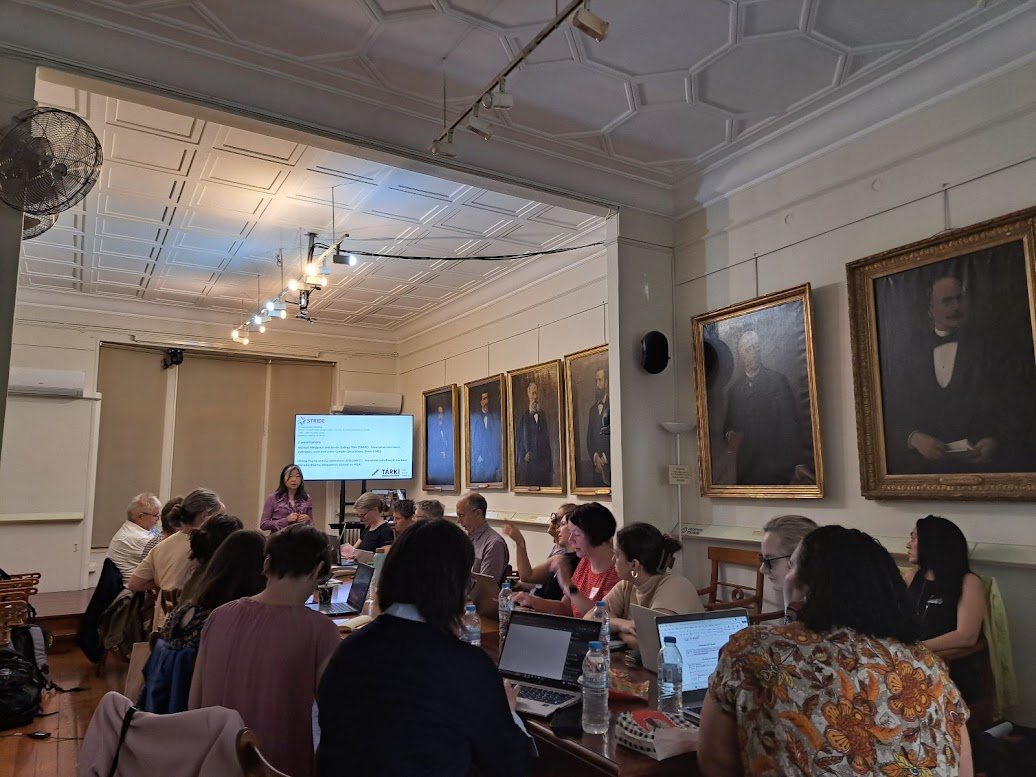
Last week, the Jagiellonian University in Krakow, Poland hosted a co-creation workshop focused on presenting research findings to policymakers. The workshop brought together researchers, education and training stakeholders, and decision-makers to collect feedback and co-design a new digital toolbox to support policymakers in addressing educational inequalities across Europe. The STRIDE Toolbox will be a resource dedicated to translating complex research findings into actionable insights for policymakers in Europe and at European institutions. Participants included researchers, representatives from organisations working in formal, non-formal, and informal learning, and advising on public educational policies, as well as representatives of learners with disabilities, parents, and school heads.
Bridging research and policy
The primary objective of the STRIDE Toolbox is to provide a translation of research findings into actionable insights and a selection of techniques for assessing inequalities in education, training, and learning achievements over time. Developing a comprehensive toolbox for policymakers will facilitate effective collaboration with researchers, ensuring that research findings are clearly communicated and tailored to meet the specific needs and priorities of decision-makers. By demonstrating the power of longitudinal data, the project aims to enhance knowledge of what shapes educational outcomes and how best to support all students, ultimately reducing inequalities in the short, medium, and long term.
The workshop was structured into two thematic rounds. The first focused on presenting the STRIDE toolbox prototype and the “Policy Cycle” as an organising framework, while the second introduced the STRIDE interactive map showcasing significant factors in shaping inequalities.
Reflections on the policy cycle
A central theme of the discussion was the practical application of the policy cycle model – encompassing agenda setting, formulation, implementation, and evaluation. While the model was recognised as a logical way to describe policymaking, participants offered several critical insights:
- Context of policy reforms: It is important to include in the tool, the wider policy context of particular reforms, e.g. law of education, strategic policy frameworks, other strategic documents on the country level, or EU legislation that create an environment for introduction of a particular reform
- Evaluation gap: A recurring observation was that the evaluation stage is often the most neglected in certain national contexts. Participants noted that reforms are frequently implemented without sufficient follow-up, sometimes leading to the “re-discovery” of solutions that had already been tried.
- Top-down vs. grassroots perspectives: Discussion highlighted that while high-level officials may be familiar with the full cycle, those on the front lines, such as school heads and teachers, are often concentrated solely on the implementation phase. This highlights the importance of consulting and involving all key stakeholders, including practitioners, educators, researchers, students, parents, families, and civil society organisations, in the design and evaluation of education and training reforms.
- Consultation vs co-construction: Some feedback indicated that consultations, when conducted, can sometimes seem like a “facade,” where practitioners and researchers are asked to participate only after key decisions have already been made. The consultations need to be ongoing throughout the whole policy cycle. There is also a need to establish structures for consultations, in particular to groups that do not have clear representation, such as parents.
Communication: it is crucial how the reforms are communicated, how they are introduced and discussed with diverse groups to create/strengthen ownership of the changes; the evidence needs to be shown to argue for particular reforms but also communication need to continue through the policy cycle to show the reform results.
Data as a tool for transformation
In the second part of the workshop, Maria Symeonaki, director of Social Statistics and Data Analysis Laboratory (STADA Lab), introduced the STRIDE interactive map, which highlights significant factors contributing to inequalities in education. The map aims to visualise educational inequalities and their evolution over time, inform policy by providing data on the impact of educational reforms, and engage stakeholders by offering a shared platform to explore data and trends across various dimensions of inequality. Overall, the map strives to empower stakeholders to perform detailed policy impact analyses, identify effective practices, and help develop resilient educational reforms aligned with sustainable development goals.
Feedback from participants indicated that, while the tool is sophisticated, it has considerable potential for “knowledge brokers” who need to inform stakeholders, including policy and decision-makers, of the importance of specific interventions. General feedback on the map and toolbox included:
- Comparative value: The ability to compare indicators across different countries was considered a major strength, aiding users in understanding their own national challenges within a broader European context.
- User accessibility: To make the tool more user-friendly for non-researchers, suggestions included adding brief video tutorials and a Frequently Asked Questions (FAQ) section linked directly to various stages of the policy cycle.
- Long-term vision: participants agreed that the map is a very useful tool, and questions were raised about how it will be updated at the end of the project. They emphasised the need to shift focus from short-term to long-term visions that are informed by ongoing longitudinal data, which can foster meaningful improvements in equity and inclusion in education.
- Understanding of inequalities: the group pointed to the wider understanding of school or educational success in the context of inequalities, where diverse indicators in relation to well-being, safety, belonging, violence prevention could be used to widen the scope of analysis and to monitor the experiences of diverse groups in education.
The dynamic, active workshop held in Krakow underscored the importance of co-creation in developing tools that are not only scientifically rigorous but also practically useful for education and training stakeholders and policymakers. By integrating this feedback, the STRIDE project continues to refine its toolbox, ensuring it remains a key resource for those working to create more inclusive and equitable educational systems across Europe.
We thank all participants for their valuable comments and suggestions for improvement.