The Nordic Educational Research Association (NERA) strives to promote educational inquiry and supports the use of research to enhance education. Moreover, it aims to strengthen the visibility of education as a discipline in the Nordic societies and to provide a platform for Nordic researchers as well as collaboration between them and the international community.
NFPF/NERA, founded in 1972, has established itself as a meeting place for educational researchers in the Nordic countries. The core activities of the Association involve holding an annual, peer-reviewed conference, production of the journal Nordic Studies of Educational Research as well supporting the ongoing work of the constituent networks.
The NERA Conference 2026, was hosted by STRIDE’s partner VIA University College in Denmark, it took place from 4-6 March 2026 and the theme of the conference was “Courage and Agency in Education for the Present”.
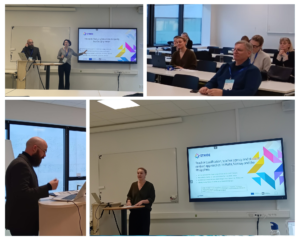
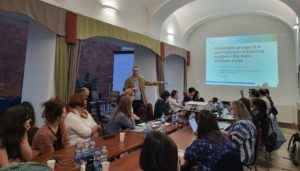
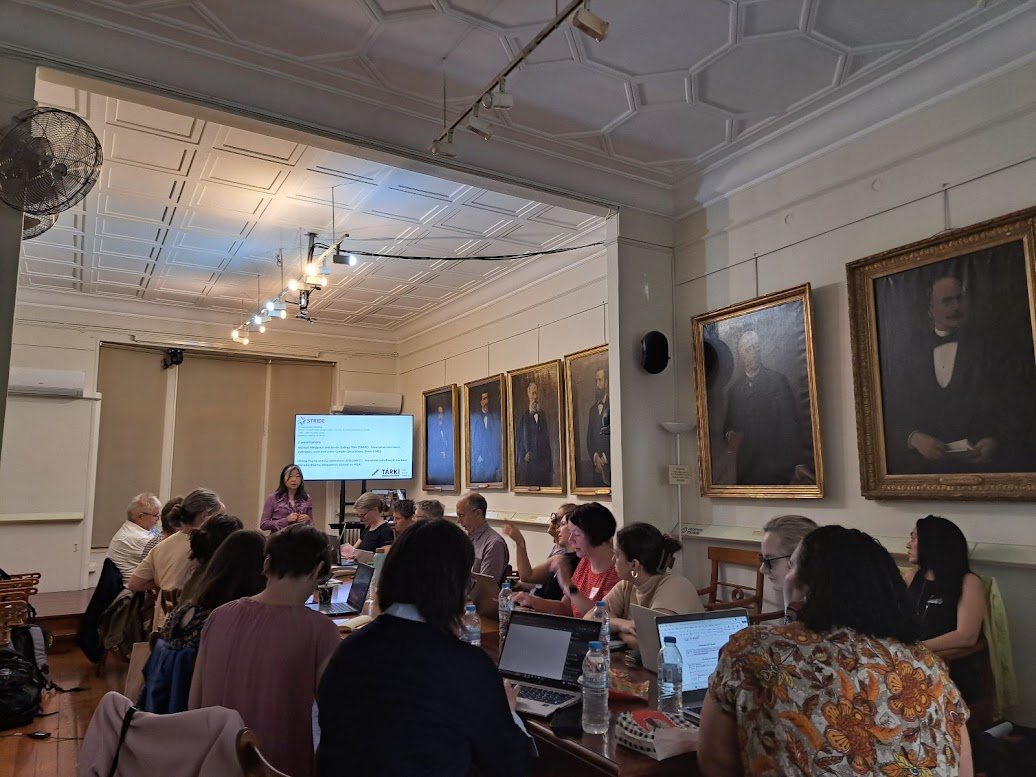
Several STRIDE researchers from Oslo Metropolitan University (OsloMet), VIA University College and Jagiellonian University presented new findings from the STRIDE project, contributing to the discussion by presenting three paper presentations as part of the conference programme.
The first presentation was held by Magdalena Ślusarczyk (JU), Maria Świątkiewicz-Mośny (JU), Simon Nørgaard Iversen (VIA), Lihong Huang (OSLOMET), in Parallel session 1: Politics of Education and Education Policy Studies, chaired by Susan Wiksten, and the paper “Policies for Reducing Educational Inequality in a Changing Europe” was presented.
In the second one, the paper “Teacher qualification, teacher agency and student-centred approaches in Malta, Norway and the Philippines” was discussed. It was held by Siri Mohammad-Roe (OSLOMET), Mario Mallia ( IFE, Malta), Latrell Gray Almosa Arcenas (WVSU, Philippines) and Lihong Huang (OSLOMET).
The presentation of the third paper, titled “Mapping Educational Inequalities in Europe: An Interactive Visualisation of Indicators and Policy Reforms (2000–present)” was held by George Filandrianos (NKUA), Simon Nørgaard Iversen (VIA), Márton Medgyesi (TARKI), Dimitris Parsanoglou (NKUA), Magdalena Ślusarczyk (JU), Maria Symeonaki (Panteion University of Social and Political Sciences) and Zsófia Tomka (TARKI) in Parallel session 8: Educational Measurement and Assessment. The study falls under the “Educational measurement and assessment” field and it is relevant to Nordic educational research, as it offers insights on how equity and inclusion evolve across diverse policy contexts. The paper introduced an interactive approach to exploring key indicators and policy reforms related to educational inequality across Europe since the year 2000, using an interactive map that aims to make complex comparative data on equity, inclusion, and resilience in education accessible to researchers, policymakers, and relevant stakeholders. The presentation highlighted how data visualisation tools can support researchers, policymakers, and stakeholders in understanding complex educational trends and reforms over time. By making comparative data more accessible and interactive, the STRIDE project aims to strengthen evidence-informed discussions on educational equity in Europe.
Participating in the NERA Conference was an important opportunity for researchers of the STRIDE project to share results, receive feedback from and contribute to ongoing debates on education policy and inequality.